
1 March 2024
Promoting Digital Collaboration Futures2 Strategy
A 5-YEAR OUTLOOK FOR IAM

02 – Executive Summary
Promoting Digital Collaboration
Over the next five years,InCommon leads as the collective authority in devising creative, sustainable IAM best practices for research & education.
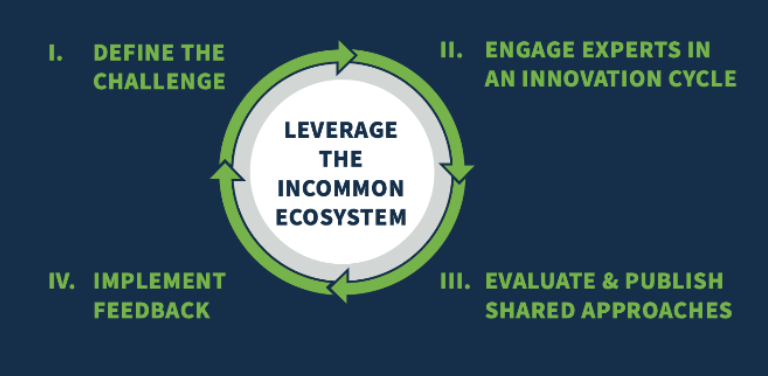
Through a four-step, repeatable process, InCommon will effectively engage the community to achieve its strategic objectives.
Strategic Objectives

AN EVOLVED, STRONG VALUE PROPOSITION
Trusted collective for IAM within R&E

CLEAR GUIDANCE & TECHNICAL RECOMMENDATIONS
How to:
SELECT, IMPLEMENT, MAINTAIN

A SECURITY-FOCUSED INNOVATION GROUP
For emerging protocols in IAM

IMPROVED TOOLS & SERVICES IMPLEMENTATION & INTEGRATION
To increase engagement with federation & trusted access platform
EASY TO NAVIGATE TOOL & SERICE OFFERINGS
For all audience groups

Integrating Next Gen Security
Lorem ipsum dolor sit amet, consectetur adipiscing elit, sed do eiusmod tempor incididunt ut labore et dolore magna aliqua. Ut enim ad minim veniam, quis nostrud exercitation ullamco laboris nisi ut aliquip ex ea commodo consequat.

New Digital Learning Modalities
Lorem ipsum dolor sit amet, consectetur adipiscing elit, sed do eiusmod tempor incididunt ut labore et dolore magna aliqua. Ut enim ad minim veniam, quis nostrud exercitation ullamco laboris nisi ut aliquip ex ea commodo consequat.

Skills Gap & Knowledge Loss
Lorem ipsum dolor sit amet, consectetur adipiscing elit, sed do eiusmod tempor incididunt ut labore et dolore magna aliqua. Ut enim ad minim veniam, quis nostrud exercitation ullamco laboris nisi ut aliquip ex ea commodo consequat.

Proliferation of Commercial Offerings
Lorem ipsum dolor sit amet, consectetur adipiscing elit, sed do eiusmod tempor incididunt ut labore et dolore magna aliqua. Ut enim ad minim veniam, quis nostrud exercitation ullamco laboris nisi ut aliquip ex ea commodo consequat.
Unification, Automation, Interoperability
Lorem ipsum dolor sit amet, consectetur adipiscing elit, sed do eiusmod tempor incididunt ut labore et dolore magna aliqua. Ut enim ad minim veniam, quis nostrud exercitation ullamco laboris nisi ut aliquip ex ea commodo consequat.
02 Introduction
InCommon’s Strategic Direction
Since its inception, InCommon, Internet2’s provider of security, privacy, and identity and access management (IAM) tools, has been an important resource to the research and education (R&E) community as a trusted partner for IAM. As a tapestry of digital infrastructure, tools, services, and legacy knowledge for R&E, InCommon is a standard-bearer for academic collaboration at scale. As such, InCommon has the potential to radically move the market segment of IAM forward in service of digital R&E collaboration.
Over the last 20+ years, the IAM landscape has changed dramatically with new commercial entrants in the space, emerging security concerns, and growing skills gaps and knowledge loss in the IAM community. This has le InCommon grappling with critical questions about what infrastructure is required to support their organizations in the coming decade. InCommon is in a unique position to help the community navigate these questions and ensure continued, secure, accessible collaboration for years to come. It will be critically important for InCommon to evolve its role to enable secure, seamless collaboration across R&E institutions at scale.
During the next five years, InCommon must step into the role of collective authority for IAM best practices in R&E – responsible for creating and disseminating guidelines, best practices, and shared solutions from the combined experience of the federation.
During the next five years, InCommon must step into the role of collective authority for IAM best practices in R&E. It is primed to facilitate and promote best-in-class digital collaboration by recommending the appropriate blends of IAM-related tools and services as well as providing governance, support, and resources to R&E institutions and their partners. This offering will provide value to the community adjacent to commercial offerings. It will also amplify the value of the collective by convening multiple perspectives to investigate and solve shared challenges.
As the collective authority, InCommon will be responsible for creating and disseminating guidelines, best practices, and shared solutions from the combined experience of the federation. The community needs a trusted body not only to convene the experts, but also to synthesize their expertise and translate it into tangible outcomes.
This new strategic direction and all of its associated objectives were craed based on a community-driven planning process. That process is detailed in the Appendix.
Background
Throughout this report, the term InCommon is used to reference all who contribute to its mission:
organization, participants, community, and collective.
Here is a glossary of InCommon terms used in this report and their meanings:
- InCommon Organization, or InCommon: refers to Internet2 leadership and staff who manage the operation of InCommon’s services, facilitate the governance structure and advisory committees, curate and steward the development of open source soware, and provide training and upskilling programs.
- InCommon Participant: refers to an organization or institution that signed a formal agreement with InCommon to participate in its services, training, and events.
- InCommon Community: refers to InCommon participants, soware users, international collaborators, support providers, and volunteers participating in governance and advisory committees to inform the collective’s technology, policy, and business evolution.
- InCommon Collective: refers to both the InCom
03 LANDSCAPE, TRENDS & OPPORTUNITIES
These trends and opportunities were identified from the consultative process and desk research (Phase 2) of this project. They comprise the current landscape of how the InCommon community manages their IAM systems as well as direction for the future.
Next-generation security impacting IAM
The InCommon community is aware of new threat actors, challenges presented by new technologies, emerging solutions, trending security protocols, which could include OpenID Connect, OAuth, and Zero Trust, as well as cybersecurity frameworks provided by the National Institute of Standards & Technology and the U.S. Department of Defense. The community is looking to InCommon to lead in integrating these protocols and innovations into InCommon’s central governance structure.
New learning modalities requiring more fluid credentialing
R&E institutions recognize that the needs of their audiences and stakeholders are evolving. We see examples of digitally-driven change all around us: institutions expanding their offerings to nontraditional students and lifelong learners seeking to take advantage of continuing education opportunities that are accessible outside of the classroom. This diversification of higher education’s audiences and their needs will require more fluid credentialing from IAM systems. Technologies such as passkeys, bring your own identity, and eWallets are at large.
Growing skills & knowledge gap
The InCommon community noted a growing gap in knowledge and skills. This gap is fueled by increasing complexity in the field, difficulty for IAM departments to keep up with the evolving domain, and loss of legacy knowledge from events such as early retirement. Additionally, respondents from the consultations expressed that IAM system management and architecture require a particular skill set, and finding professionals who are willing to and capable of working in research & higher ed IT departments is challenging.
An expansion of commercial IAM solutions
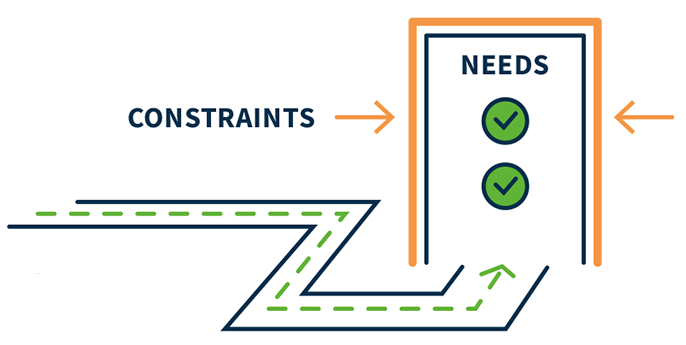
Today, organizations have a range of IAM services to choose from, between InCommon’s offerings and commercially available solutions. Many institutions benefit from a blend of commercial and InCommon service solutions. But in practice, blending services proves challenging. InCommon can better support community organizations that choose a combination of services by offering specific technical and strategic guidance that addresses the following challenges:
InCommon participants’ IT departments report difficulty around integrating and using InCommon tools and services, specifically murky implementation pathways and costs, lack of communication about current soware updates, elusive technical support, and little authority regarding next-generation security protocols.
On the other hand, when these IT leaders begin to consider using commercially available solutions, providers claim to address any IAM issue (regardless of domain or industry), eliminate integration challenges, and come with dedicated 24/7 support. While this is appealing, these solutions may not fit all the particular needs InCommon community organizations seek. Furthermore, IT leaders may even view the choice as a binary one (either a commercial solution or InCommon services) because the implementation pathways and costs to using a blend of services are unclear. With dedicated support and guidance here, InCommon can help IT leaders strike the right balance between commercial solutions and InCommon services.
Demand for unification, automation, and interoperability of IAM systems
The institutions consulted are focused on unifying, automating, and interoperating their IAM systems. Target improvements include creating integrated, seamless connections across platforms that achieve a sustainable multi-platform approach; strategically engaging third parties; and achieving or maintaining automation within IAM systems to reduce manual processes needed to support InCommon Federation.
Take the needs of provisioning, deprovisioning, and managing user lifecycles and permissions. Today, practitioners and architects struggle to quickly assemble effective solutions and maintain them on their own. These constraints create technical debt and stretch IT departments beyond their means, leaving scant resourcing to keep up with rapidly changing compliance requirements. Additionally, the increasing variety of multifactor authentication standards between third party offerings makes it difficult for InCommon organizations to understand and comply with these standards. InCommon is positioned to align R&E towards common policy, functionality, and standards to improve interoperability across technology platforms and facilitate digital collaboration.